



Churches across the Diocese of Winchester have been celebrating the wildlife and biodiversity flourishing in our churchyards as part of the Church of England’s annual Churches Count on Nature initiative.
From rural churchyards to green spaces in town centres, our churchyards provide a rich variety of plants, insects and animals and reflect God’s creativity. Churchyards can offer vital sanctuaries for nature at a time when many species and habitats are under threat.
Churches Count on Nature encourages churches and communities to explore and record the wildlife found within their grounds. The survey provides valuable information to national conservation efforts, helps engage our communities and deepen a connection with creation.
This is how some of our churches marked the event including wildlife walks, surveys, talks and community activities.
Holy Trinity, Colden Common
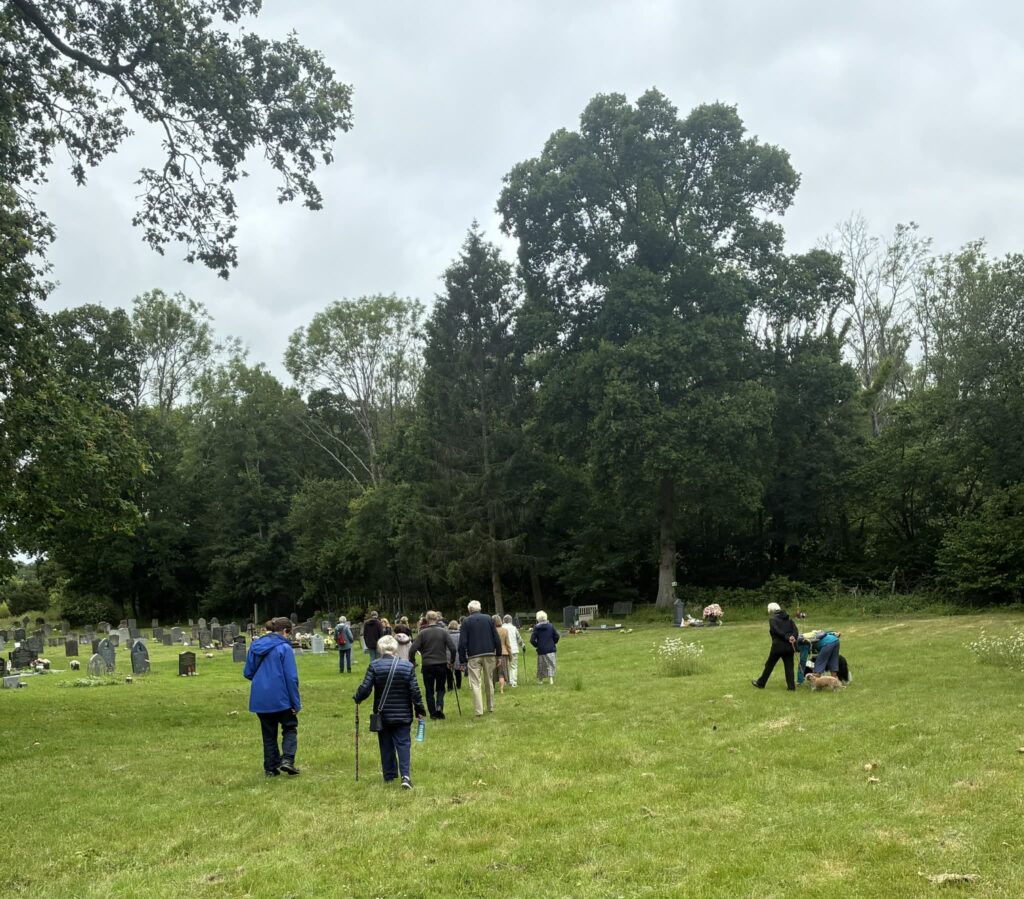
Holy Trinity marked Environment Sunday with a community service, an informative talk and ‘walk on the wildside’, led by an ecologist from the Hampshire and Isle of Wight Wildlife Trust.
The service featured hymns and readings to reflect the beauty of creation – ‘the trees of the field shall clap their hands, and we’ll go out with joy.’


Ecologist Susan Simmonds spoke about the loss of pollinator habitats and the need to restore them. She then led people around the churchyard, identifying orchid, oxeye daises, red clover and woody lichen, as well as a buzzard, tiny goldcrest and the rare Purple Hairstreak butterfly. Along the way, she highlighted the crucial role many of the plants play in supporting insects and wildlife.
More than 40 people attended the event and saw the results of the church’s rewilding project in the Victorian area of the churchyard. The initiative has created valuable habitat and foraging areas for wildlife and enhanced the biodiversity of the site.

The event was organised by the Holy Trinity Eco Church team who wanted to share with the wider community the joy, beauty and wonder of the local nature.
Pam Glasspool, who took part, said, “We believe the resources, variety and beauty of our world have been created and evolved for our benefit by God, who calls on us to use these gifts with respect and care. Doing so is an integral part of Christian worship and, as we respond to a world groaning under the greed and neglect of mankind, we wanted to open our hearts to the wonders of the natural world and to seek God’s help for its healing.”

The team highlighted their ongoing environmental work, reflecting that: “We are a small rural church but gradually, we are making a difference both as a church and as individuals in the way that we live our lives. There is no longer any use of fossil fuel in our church building, and the rewilding of the churchyard has added greatly to carbon take-up and wildlife biodiversity.”
The church was also decorated with locally picked flowers and greenery, reflecting its commitment to a more sustainable way of life. A collection was taken for the Hampshire and Isle of Wight Wildlife Trust.
All Saints Church, Alton
At the Parish of the Resurrection, the biodiversity of each churchyard is surveyed on a 4-year cycle. This year it was the turn of All Saints, a town centre church with a churchyard covering one-eighth of an acre.
Around a dozen volunteers took part in the Count on Nature, supported by experts Cathy Wilson of the Alton Natural History Society, Churchwarden Angie Briggs and horticulture student Len Lintott.


Together they identified more than 100 species of plant and insects including several recognised on the England Red List of threatened species. They were also given advice on how the biodiversity could be further enhanced across the site.
Elspeth Mackeggie Gurney, part of the Eco Church Team, said, “The variety and colours of our finds were amazing – we wondered aloud at how some of them got there, especially those not usually found in an urban environment. It is mind boggling that in such a relatively small space there are so many species.
“’Our Lord, how majestic is your name in all the earth!’ Psalm 8 verse 1 summed up how we felt when we walked around All Saints Churchyard on the annual ‘Count on Nature’ event.”

St Mary’s, Kings Worthy
At St Mary’s in Kings Worthy, areas of the churchyard are left uncut throughout the summer months, allowing grasses, wildflowers and insects to flourish.
Clipboards and identification sheets at the ready, a team of volunteers explored the churchyard and recorded the wildlife they found. Among the highlights were sightings of slow worms and the rare and striking Bee Orchid.


Count on Nature organiser Jonathan Smith said “It’s all about appreciating the variety of wildlife that God has provided, managing the churchyard for biodiversity and helping people discover the beauty that exists here. During the Summer months our churchyard is alive with grasshopper song and other wildlife.”


St Mary’s Church, Micheldever
Volunteers at St Mary’s, Micheldever embraced technology as part of their Count on Nature, using the iNaturalist and Merlin bird apps to identify and record observations. Five adults, two children and one dog gathered on a damp but warm Sunday to survey the churchyard.
They divided the churchyard into sections to investigate the fauna, flora and birdlife and recorded dozens of trees and wildflowers.


Churchwarden Louise Keys organised the event as a way of connecting with the wider community and encouraging people to engage in their local environment.
She said, “I decided to organise a Count on Nature for St Mary’s, Micheldever to invite local parishioners to come and enjoy immersing themselves in the wildlife of the churchyard. It proved a success, with people joining us from nearby and further afield. Both children and adults were very positive about taking part and are already looking forward to future wildlife surveys. It was made all the more exciting through the use of apps to record and share in our observations in real time.”
It’s hoped the events will help people discover the richness on their doorstep and inspire communities to protect and cherish it for future generations.


